About LocalBridge
LocalBridge arranges dinners in the homes of Indonesian families. Started by Laura after eight months living in Bali and Gili Trawangan, where families kept inviting her to cook and eat with them.
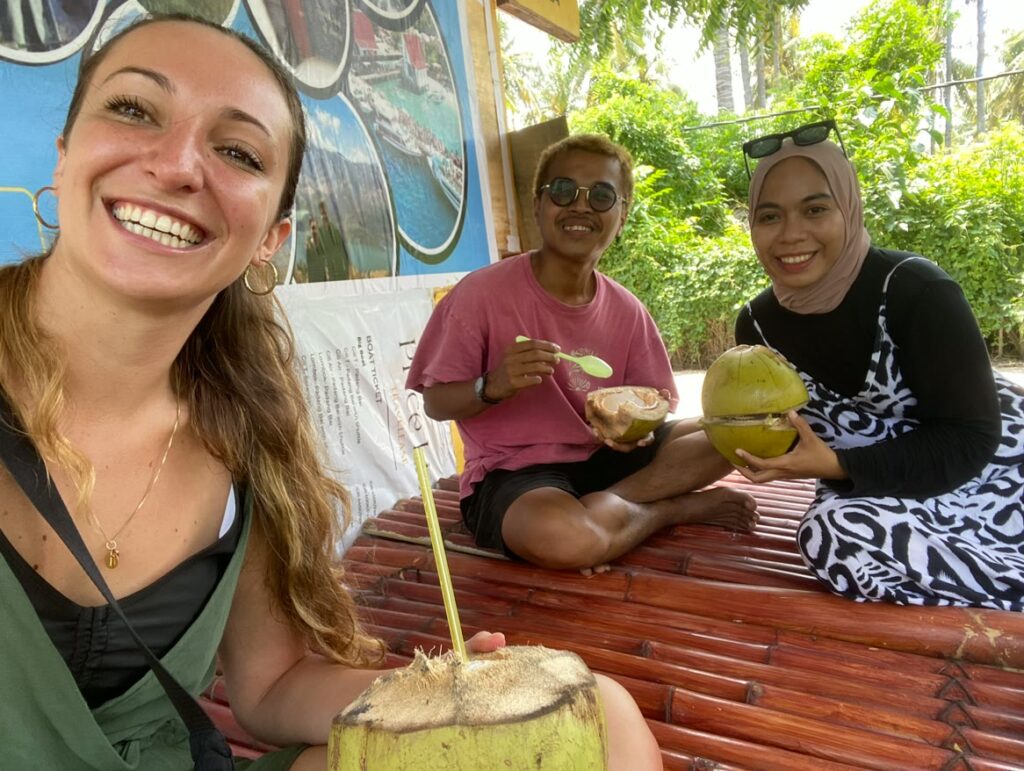
LocalBridge arranges dinners in the homes of families in Indonesia. It was started by Laura, who moved to the country to live rather than to visit, and spent eight months between Bali and Gili Trawangan being fed by people who kept inviting her into their kitchens. Every dinner you book here is with a household we have eaten with ourselves, and the money reaches that household directly instead of a venue, an agency or a chain.
It began with an invitation, not a business plan
Laura came to Indonesia intending to stay. Not a fortnight of temples and a beach club — an actual address, a neighbourhood, the same warung every week. Over eight months across Bali and the Gili Islands, something happened often enough to stop being a coincidence: people invited her to dinner. Not to a restaurant. To their house.
The invitations came with a reason attached. They wanted to explain how their family cooked, what they believed, why a particular dish appears at a particular time of year. They wanted to be asked questions. And they were curious back — about where she was from, what her family ate, why she had come so far and decided not to leave.
Almost nobody visiting Indonesia gets this. You can spend three weeks on the islands, eat superbly, meet a hundred people who work in tourism, and never once sit on someone’s kitchen floor while they show you how to grind a spice paste properly. It is the single best thing about living here, and it is invisible from a hotel.
The dinner that turned it into a company
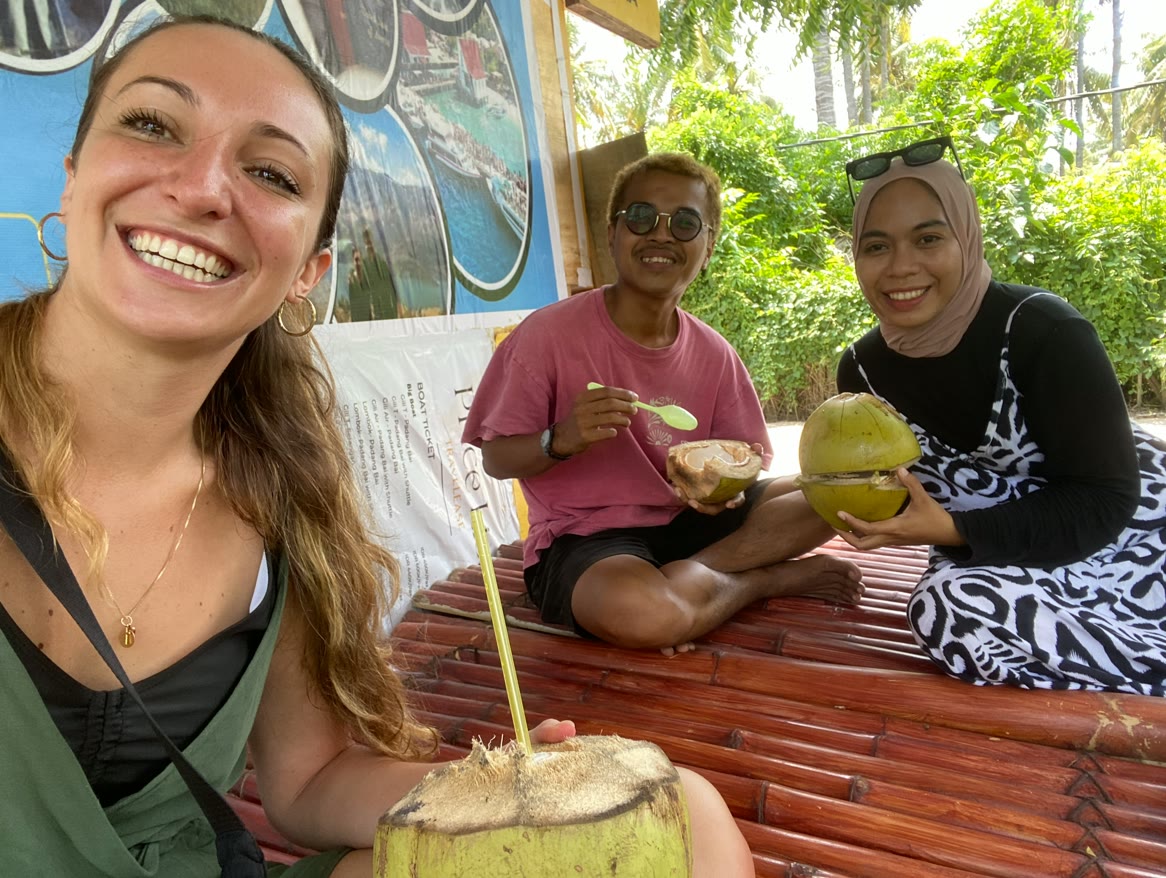
The evening that started LocalBridge was with Lalu and Sinta, on Gili Trawangan. There was no plan for it to be anything. It was an afternoon that ran long.
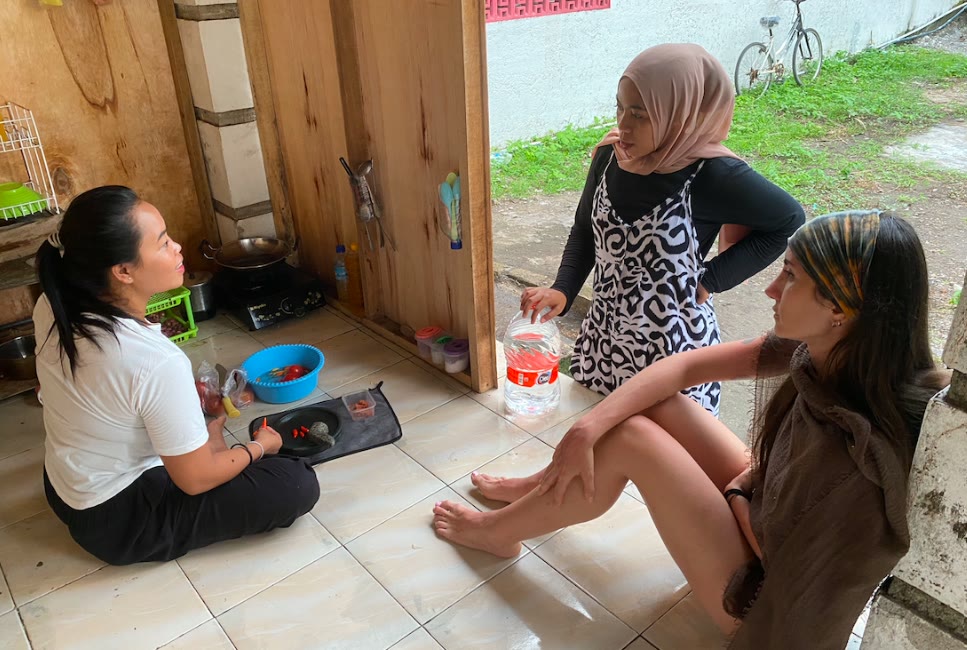
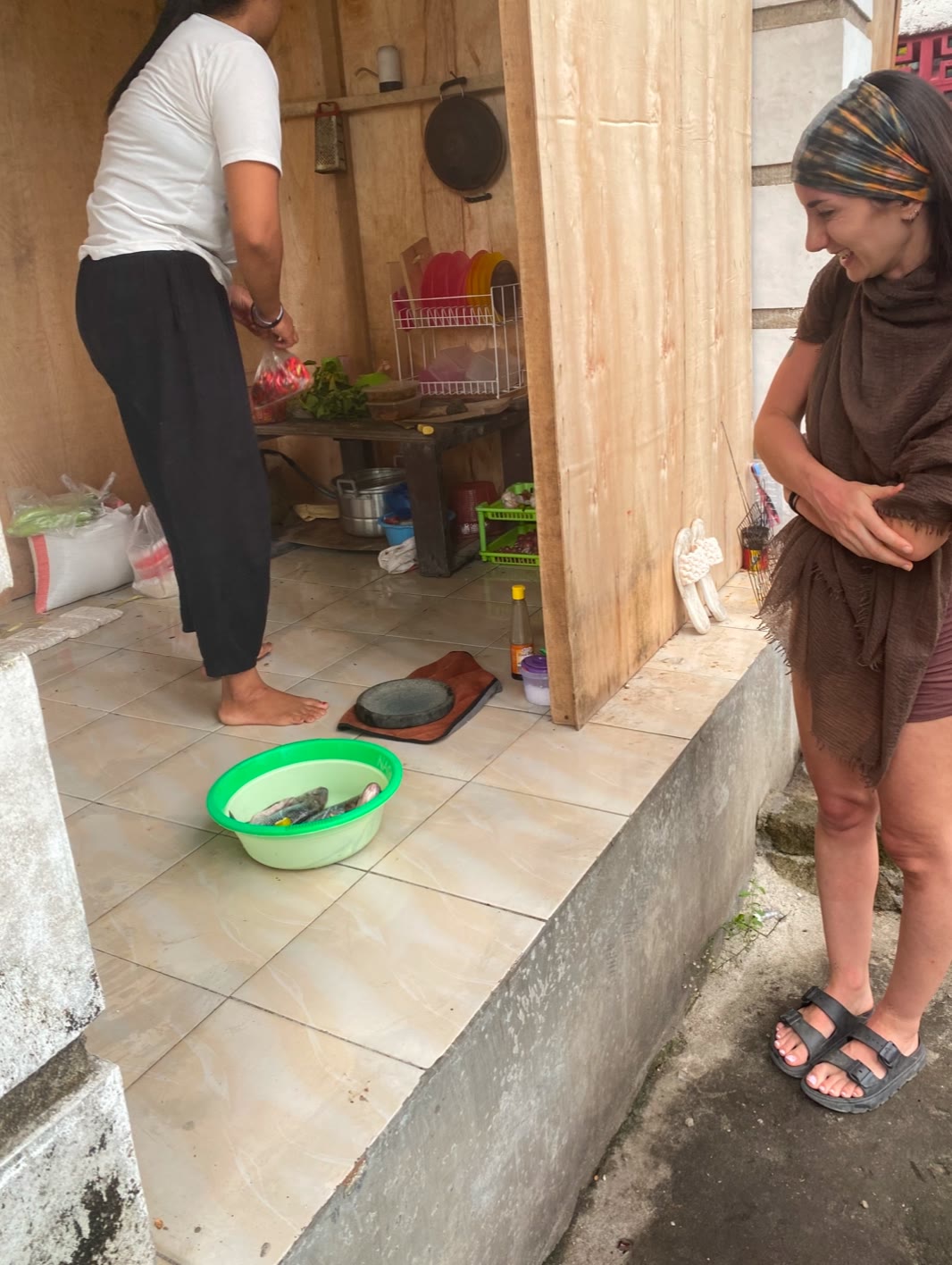
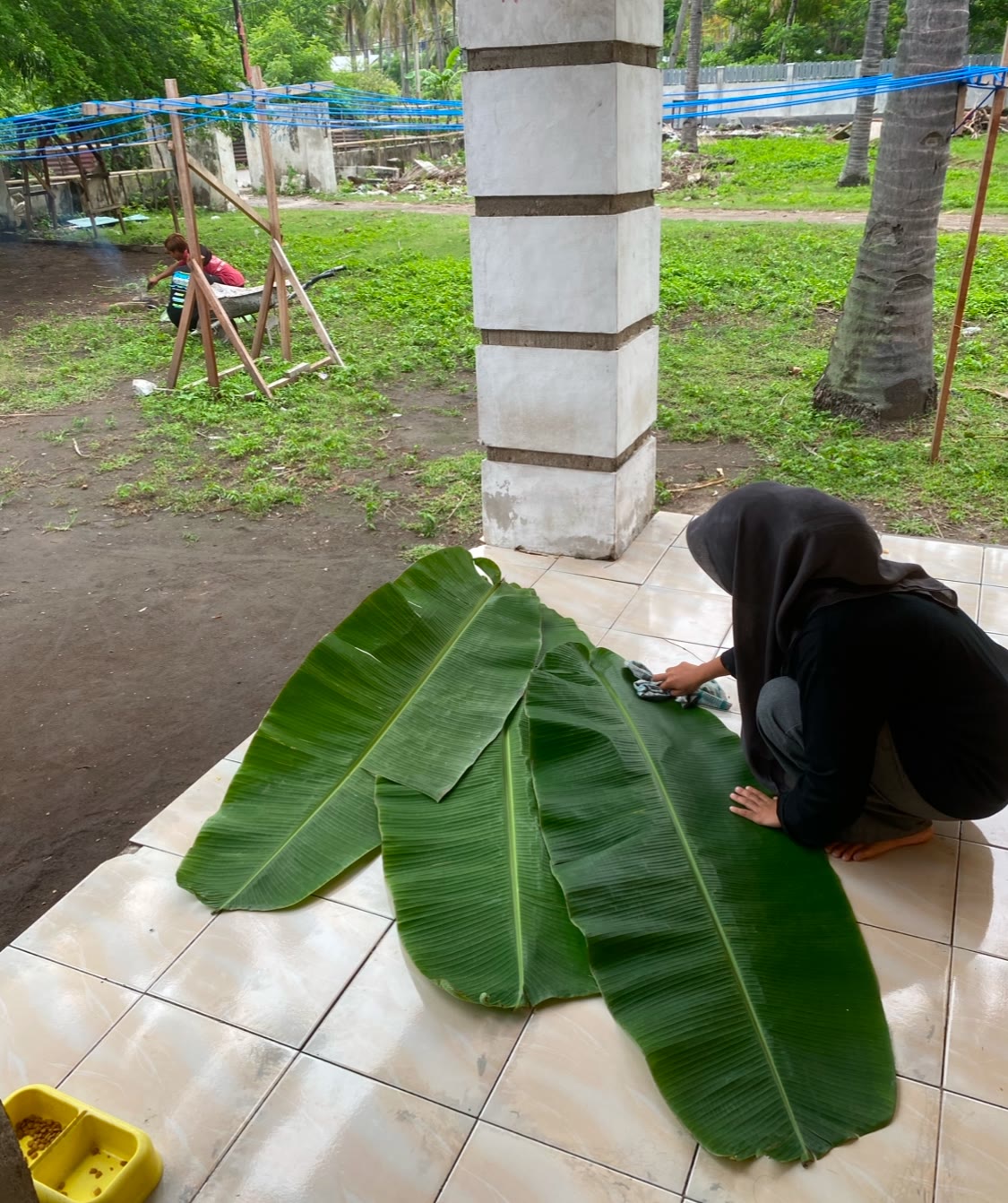
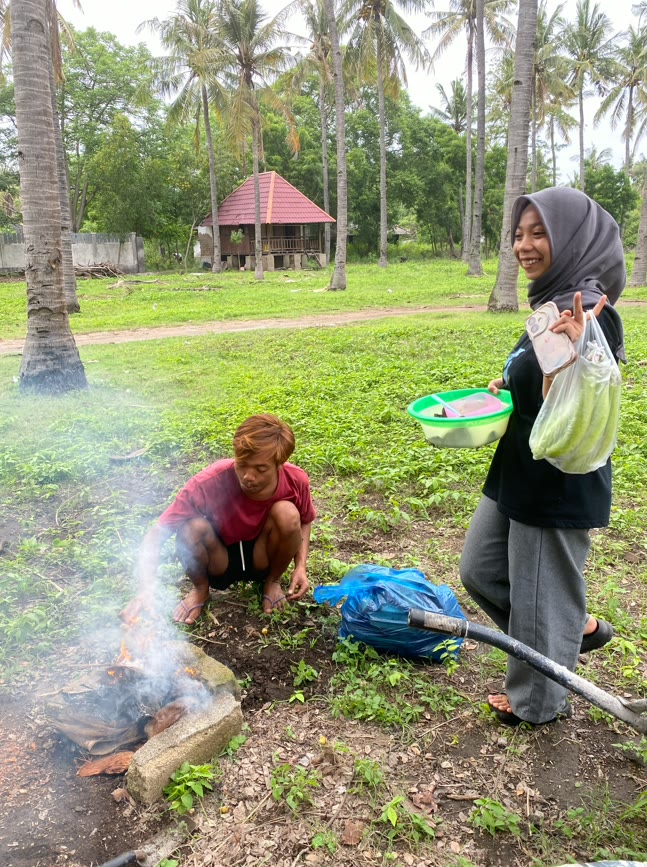
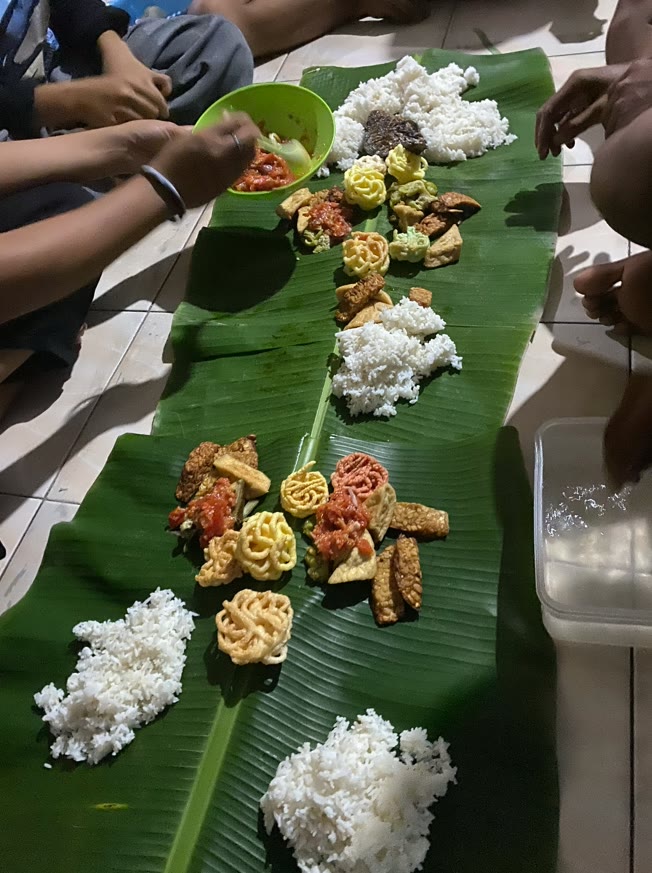
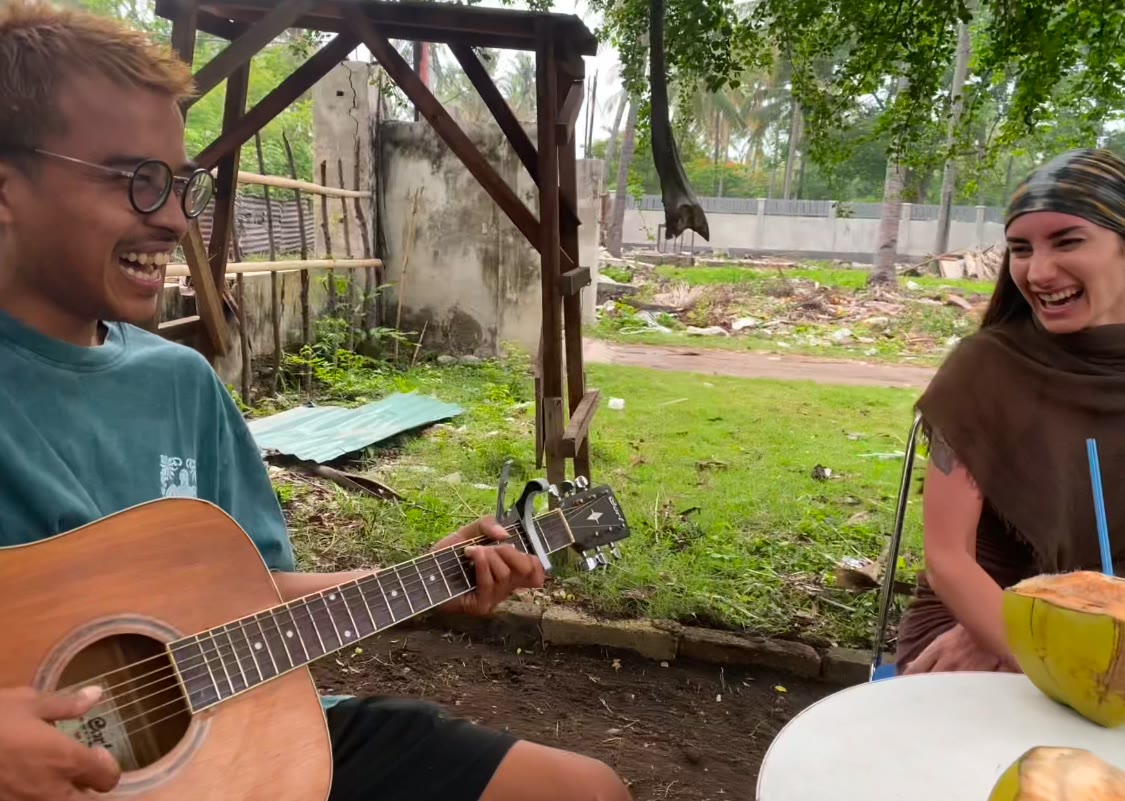
It went roughly like this. Sitting on the kitchen floor sorting through fresh chillies, because that is where the work happens and there is no reason to stand. A green plastic basin of whole fish arriving from the market, still smelling of the sea. Banana leaves wiped down one by one and laid out in place of plates. A fire lit from dried coconut husks in the yard, because coconut husk is what there is and it burns hot. Then everyone sitting down together, eating with their hands from one long leaf. Afterwards, somebody picked up a guitar.
The photographs below are from that night. They were taken on a phone and sent over WhatsApp, which is why they look like a memory rather than a brochure. We have never seen a reason to replace them.
What is begibung?
Begibung is the Sasak tradition of eating together from a shared banana leaf or tray, sitting on the floor. Lombok’s Balinese Hindu communities do the same thing and call it megibung. It is one custom crossing a religious line that usually divides people, and both sides guard it.
There is one rule that tells you what it is for: nobody starts eating until everyone has been served. Around the leaf there is no head of the table, no better seat, no separate plate for the important guest. Researchers who study the custom describe it as a working demonstration that the rich and the poor, the educated and the unschooled, the official and the ordinary person are the same size when they sit down to eat.
Which is why being invited to one matters, and why it cannot be staged in a restaurant. A tour puts you at a table and brings you food. Begibung puts you on the floor and hands you the same leaf as everyone else.
Why book a family instead of a company
Indonesia earns enormously from tourism, and a surprising amount of that money leaves again almost immediately. Economists call it leakage, and in Bali it has been measured carefully. In the accommodation sector, roughly half of what a guest spends at a large international chain hotel flows back out of the local economy through franchise fees, management contracts, imported supplies and profits sent overseas. At small, locally owned places, the figure is under a tenth.
The same logic applies to a meal. Book a cooking class through a large operator and the cook is on a wage, the kitchen is a rented venue, and the household whose recipes you are eating is not in the room. The margin sits with whoever owns the booking.
LocalBridge is arranged the other way round. The family is the business. They set their own dates, they cook the food they eat themselves, and the great majority of what you pay stays in the house that fed you. For most of our hosts this is a second income beside fishing, farming, driving or a shop — the kind of money that covers school fees and a motorbike repair rather than a salary.
We are not a charity and we do not describe these dinners as helping anyone. The families are not beneficiaries. They are hosts running a small business, extremely good at the thing they are selling, and they set the price.
How we work with the families
We eat there first
No household appears on this site before we have sat through a full evening with them as guests. We know the kitchen, the road in, and how the night actually runs.
They keep control
Hosts choose their own dates, group sizes and menu, and say no to evenings that do not suit the family. Nobody is on a rota.
Nothing is performed
No costumes, no script, no dance at eight o’clock. You are eating what the family eats, in the room they eat it in, with whoever else is home.
Where we cook
Dinners currently run on Gili Trawangan and in Canggu and Ubud in Bali. Gili Trawangan and the surrounding Lombok communities are largely Sasak and Muslim; Canggu and Ubud are Balinese Hindu. The hospitality is the same and the cooking is not — different spice pastes, different rules about pork and alcohol, different reasons for a dish to exist. Ask your hosts. They will tell you at length, which is the entire point.
Who you are dealing with
LocalBridge is run by Laura, who lives in Indonesia and answers the messages herself. Bookings are handled through Bókun, the reservation system also used by our listings on GetYourGuide, Viator and Tripadvisor, so payment and confirmation work exactly as they would on any of those platforms. Booking here rather than through an OTA simply means less of the price is taken in commission before it reaches the family.
If you want to know anything before booking — dietary requirements, whether the kids will be bored, how the pickup works when you are staying somewhere obscure — send a message. It reaches a person.
Sources for the tourism figures above: studies of economic leakage in Bali’s accommodation sector, and research on begibung as social capital among Sasak communities in West Lombok.
Questions
Who is behind LocalBridge?
Laura, who moved to Indonesia to live there and spent eight months between Bali and Gili Trawangan before starting the company. She lives in Indonesia, has eaten with every host family on this site, and answers enquiries herself.
Are these real family homes or a restaurant set up to look like one?
Real homes. You are cooking in a kitchen the family uses every day and eating in the room they eat in, with whoever else happens to be home. There is no venue, no set, and no staff.
What is begibung?
The Sasak tradition of eating together from a shared banana leaf or tray while sitting on the floor. Balinese Hindu communities call the same custom megibung. Its defining rule is that nobody begins eating until everyone has been served, which makes it a deliberate demonstration that everyone at the meal is equal.
How much of what I pay actually reaches the family?
The great majority. The family sets the price and runs the evening as their own small business. Booking direct rather than through a large travel platform mainly means less is taken in commission before it reaches the household.
Is LocalBridge a charity or a volunteering project?
No. These are commercial bookings with families running a small business, and the hosts set their own prices, dates and menus. For most of them it is a second income alongside fishing, farming, driving or a shop.
Which islands do you cover?
Gili Trawangan in the Lombok group, and Canggu and Ubud in Bali. Lombok and the Gilis are largely Sasak and Muslim, Bali is Hindu, and the cooking differs accordingly.